
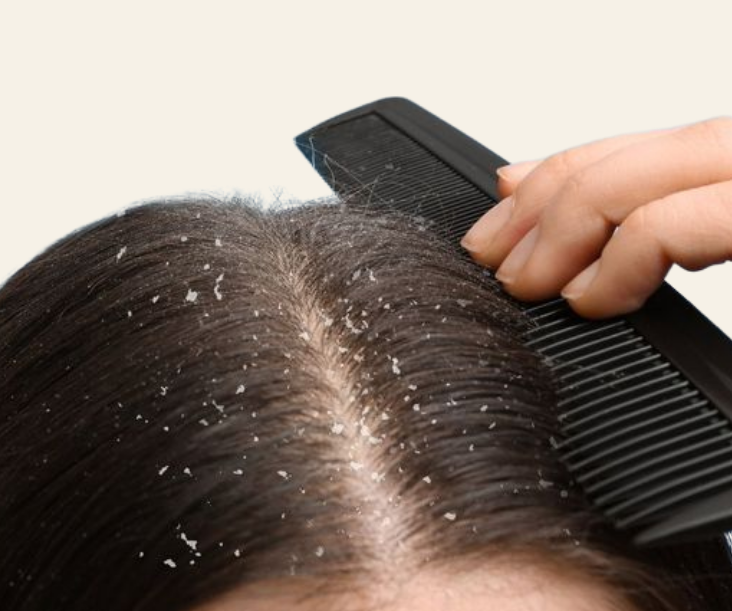
Winter dries out your skin, including your scalp due to a drop in moisture in the atmosphere. The scalp loses hydration much faster than it can restore it, leading to dryness, tightness, and visible flakes that show up on your clothes, pillows, phone screens, and pretty much everywhere. Moreover, indoor heating, fewer hair washes, and friction from woollens makes your scalp even drier, and winter dandruff harder to get rid of.
Why Anti-dandruff shampoos don’t work for everyone
Regular anti dandruff shampoos or home remedies do not respond to fungal growth, scalp inflammation, or a weakened scalp barrier, they merely wash away your dandruff that eventually returns.
Your bathing habits can make a difference too. Hot showers can strip away natural oils and leave the scalp drier and more irritated. Meanwhile, applying oil can trap fungus and dead skin cells, which exacerbates the underlying cause of dandruff.
As a rule of thumb, if your dandruff keeps coming back every few days, you are probably treating the symptoms and not the cause.
What actually causes winter dandruff
Winter dandruff is not the same as having a dry scalp. It often has deeper causes that involve your scalp’s barrier, oil secretion, and fungal growth due to atmospheric changes. Here’s what could be causing it:
- Fungal Overgrowth
The Malassezia fungus naturally lives on the scalp. In winter, the dry and irritated scalp barrier allows this fungus to multiply faster. This leads to itching, flakes, and inflammation.
- Seborrheic Dermatitis
This is a chronic inflammatory scalp condition that often worsens in cold weather. It causes greasy flakes and itching. It is usually mistaken for regular dandruff but actually requires medical intervention.
- Excess Oil Secretion
The drying scalp in winter often produces more oil. This excess oil combined with dead skin on the scalp forms thick persistent flakes.
- Hot Showers and Hair Products
Hot water strips away your natural oils and leaves the scalp irritated. Shampoos with strong surfactants can damage the barrier further, causing more peeling, redness, and flaking.
When should you visit a dermatologist
If your itching persists and dandruff keeps coming back even after washing with anti-dandruff shampoo, or if you notice hair fall along with the flakes, it usually means the issue is deeper and needs expert intervention to prevent further damage. Quoting Dr. Avik Ghosh from Esmer Skin and Wellness Clinic, “It is important to address persistent dandruff from the roots with the right medication. For severe cases, we recommend a scalp peel once every week for 4 to 6 weeks to deal with the seborrheic dermatitis and fungal growth.”
Conclusion
Winter dandruff often persists because the scalp barrier weakens in the cold, making it more prone to fungal growth, inflammation, and excess oil build-up. When flakes return within
days of hair wash or are accompanied by itching or hair fall, it is a sign the issue needs diagnosis not just a different shampoo.